
Process Overview
Chrome Plating
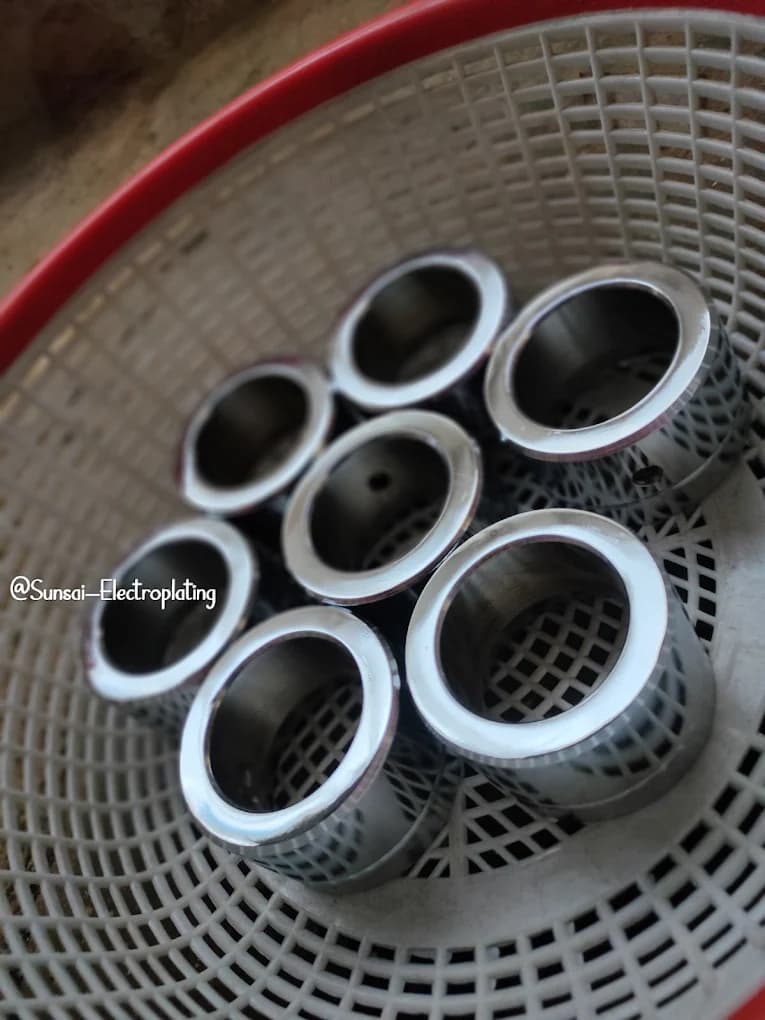
Chrome plating is one of the most recognisable and technically demanding electroplating processes. It deposits a thin layer of chromium onto a substrate, creating a mirror-bright, highly corrosion-resistant surface. At Sunsai, we offer decorative chrome for high-gloss aesthetics, hard chrome for industrial wear resistance, and satin chrome for a refined low-reflectivity finish.
Coating Thickness
Decorative / satin chrome
0.1 – 0.5 µm
Hard chrome
25 – 500+ µm
Typical Turnaround
3–5 business days (standard)
Available Types
Types of Chrome Plating
Decorative Chrome
Thin, bright finish applied over a nickel undercoat. Used for automotive trim, furniture hardware, bathroom fixtures, and consumer products. Provides a high-gloss mirror appearance with good corrosion resistance.
Hard Chrome
Thick industrial chrome deposit (25–500+ microns) applied directly for wear and corrosion resistance. Used on hydraulic cylinders, shafts, moulds, and machine components. Exceptional hardness (900–1100 HV).
Satin Chrome
A softer, low-reflectivity chrome finish with a brushed or frosted appearance. Achieved through controlled bath conditions or post-plating treatment. Popular for interior automotive trim, premium hardware, and consumer products where high gloss is undesirable.
Why It Works
Key Advantages
- Exceptional hardness and wear resistance
- Outstanding corrosion protection
- High-gloss decorative finish
- Low coefficient of friction
- Heat resistance up to 400°C
- Dimensional restoration of worn parts
Where It's Used
Applications
- →Automotive bumpers, grilles, and trim
- →Hydraulic cylinders and rods
- →Industrial moulds and dies
- →Bathroom and kitchen fittings
- →Machine shafts and journals
- →Motorcycle parts and accessories
How We Do It
Our Process
A proven, step-by-step approach — from surface preparation to final inspection.
Thorough degreasing & cleaning
Mechanical or electrolytic polishing
Copper strike (decorative only)
Bright nickel undercoat (decorative only)
Chrome electrodeposition
Post-treatment & quality inspection
Step 1
Thorough degreasing & cleaning
Step 2
Mechanical or electrolytic polishing
Step 3
Copper strike (decorative only)
Step 4
Bright nickel undercoat (decorative only)
Step 5
Chrome electrodeposition
Step 6
Post-treatment & quality inspection
Hard chrome is deposited directly onto the substrate after activation — the copper and nickel undercoats apply to decorative and satin chrome only. Satin chrome uses the same electrodeposition bath as decorative chrome but with modified bath additives or mechanical post-treatment to reduce reflectivity. Exact steps vary by substrate alloy, part geometry, and specification.